
A fractional CFO is an experienced finance executive who works with your company on a part-time or project basis, giving you senior financial leadership without the cost of a full-time hire. For a growing Singapore SME, that is often the most practical way to bring strategic finance into the business at the point where decisions start to outrun the existing team. This guide explains what the role covers, the compliance ground it has to hold in Singapore, what it costs, and the signs your business is ready for one.
What a Fractional CFO Actually Does in Singapore
The remit is strategic rather than transactional. A fractional CFO does not chase invoices or post journal entries. The role is to read the numbers your bookkeeping team produces, turn them into decisions, and build the financial infrastructure your business needs to grow with confidence.
In Singapore, the value is in judgement, not filing. A fractional CFO advises on when GST registration is worth electing voluntarily, not just when it becomes compulsory, weighing input tax recovery and credibility against the commitment it brings. The role extends to the financial structuring behind cross-border invoicing, and presenting SFRS-based numbers in a way investors and lenders trust. Routine filing, including ECI and the annual return, is handled by your bookkeeper, corporate secretary, or tax agent. A fractional CFO sits a layer above that, on the decisions those filings only report.
Why Strategic Financial Leadership is the Bedrock of Scaling
As your business evolves, so do its financial needs. The transition from a startup to a scaling enterprise introduces new layers of complexity that require expert navigation. Strategic financial leadership is the compass that guides your company through these evolving landscapes, ensuring that every decision is informed, every resource is optimised, and every opportunity is seized.
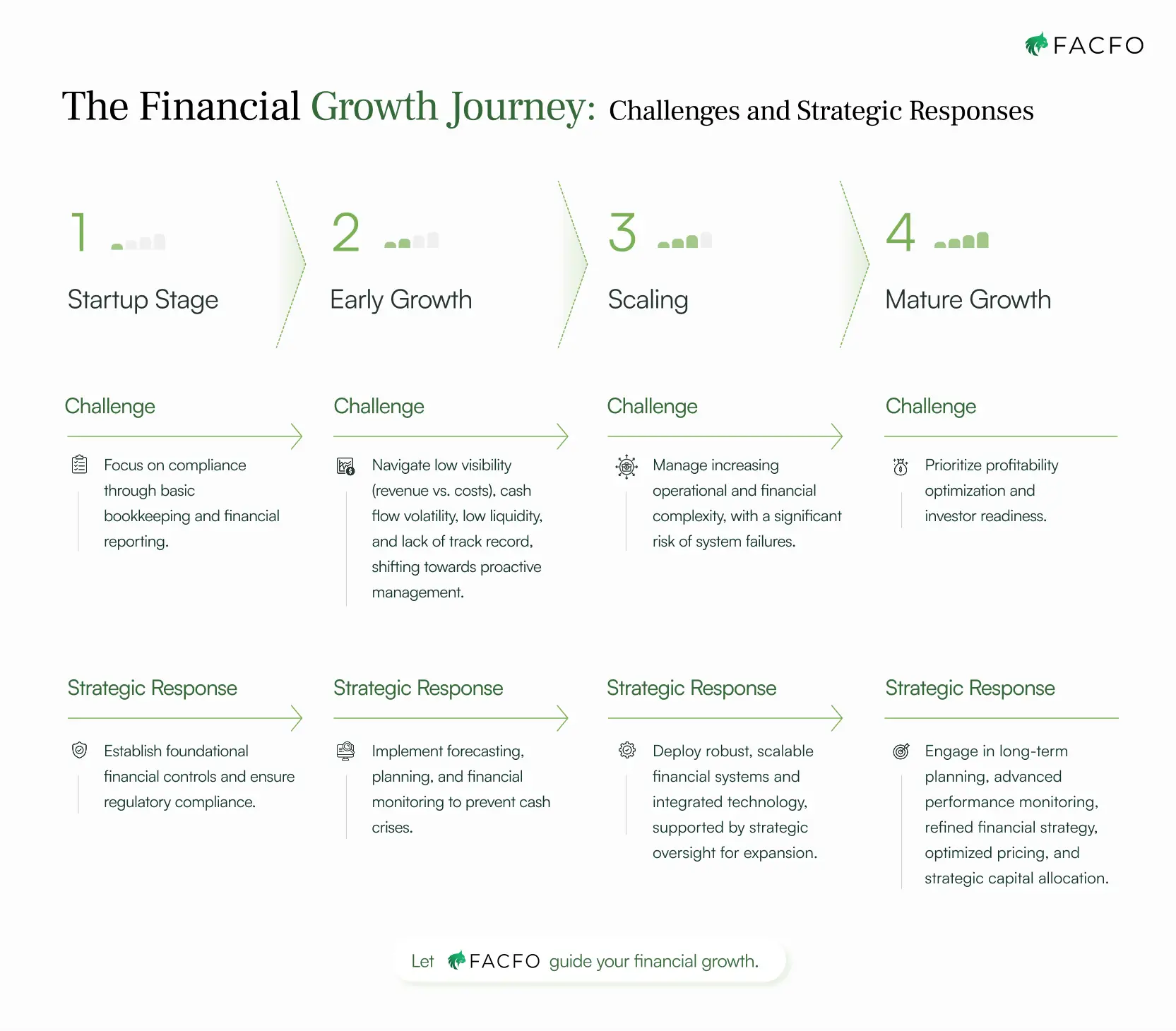
Without this expert guidance, businesses often encounter significant hurdles:
- Cash Flow Volatility: The lifeblood of any operation, inconsistent cash flow can stifle growth, delay critical investments, and create operational bottlenecks. Understanding and managing cash flow proactively is paramount.
- Inaccurate Forecasting: Relying on guesswork for future revenue and expenses leads to poor decision-making, missed targets, and an inability to plan effectively for market shifts or investment needs.
- Suboptimal Pricing and Hidden Costs: A lack of deep financial analysis can result in pricing that doesn’t reflect true costs or market value, and the overlooking of significant expenses that erode profitability.
- Missed Growth Opportunities: Without a clear financial strategy and the data to support strategic moves, businesses may hesitate to invest in expansion, research and development, or new market ventures.
- Investor Concerns and Funding Challenges: Securing investment or loans requires compelling, reliable financial data and a clear, well-articulated financial strategy. Gaps in these areas can be a major impediment.
Strategic financial leadership provides the framework to overcome these challenges, transforming potential pitfalls into pathways for sustained growth and stability.
The Core Pillars of Strategic Financial Leadership
Expert financial leadership encompasses a range of critical functions that work in synergy to drive business success. These pillars are interconnected and essential for a holistic approach to financial management:

Strategic Planning and Financial Roadmapping
At its heart, strategic financial leadership involves developing a clear, actionable financial roadmap. This roadmap is more than just a budget; it’s a comprehensive plan that aligns your financial objectives with your overarching business goals. It outlines key milestones, identifies necessary investments, and defines the financial strategies required to achieve your vision. This involves:
- Defining Financial Objectives: Setting clear, measurable, achievable, relevant, and time-bound (SMART) financial goals.
- Developing Long-Term Financial Strategies: Creating plans for revenue growth, cost management, capital allocation, and risk mitigation.
- Establishing Key Performance Indicators (KPIs): Identifying and tracking the metrics that truly matter for your business’s success.
Optimising Pricing and Uncovering Cost Layers
Understanding your true cost structure is fundamental to setting profitable prices and ensuring financial health. Strategic financial leadership delves deep into your operations to:
- Determine Optimal Selling Prices: By thoroughly analysing your cost of goods sold (COGS), operational expenses, market positioning, and competitor pricing, you can set prices that maximize profitability without alienating customers. This involves understanding your unit economics and the value your product or service delivers.
- Gain Clarity on Cost Layers: Many businesses overlook critical cost components or misattribute expenses. Expert analysis can reveal hidden costs, inefficiencies, and areas where spending can be optimised. This includes a detailed examination of direct and indirect costs, overheads, and variable versus fixed expenses.
- Identify Overlooked Expenses: A fresh, analytical perspective is crucial for uncovering expenses that may have been missed or miscategorised, providing a true picture of your operational costs and their impact on profitability.
Robust Cash Flow Management
Cash flow is the lifeblood of any business. Strategic leadership ensures that cash is managed effectively to support daily operations, fund growth initiatives, and weather economic uncertainties. This involves:
- Accurate Cash Flow Forecasting: Predicting future cash inflows and outflows with precision allows for proactive planning and mitigation of potential shortfalls.
- Optimising Receivables and Payables: Streamlining collection processes for incoming payments and strategically managing outgoing payments to maintain healthy liquidity.
- Developing Contingency Plans: Preparing for unexpected events or market shifts that could impact cash flow.
Together these determine your runway, how long the business can operate on the cash it holds. For a practical breakdown, see what burn rate and runway tell you about your business.
Accurate Financial Forecasting and Investor-Ready Models
Reliable financial forecasting is essential for strategic planning, securing investment, and making informed decisions. This goes beyond simple projections:
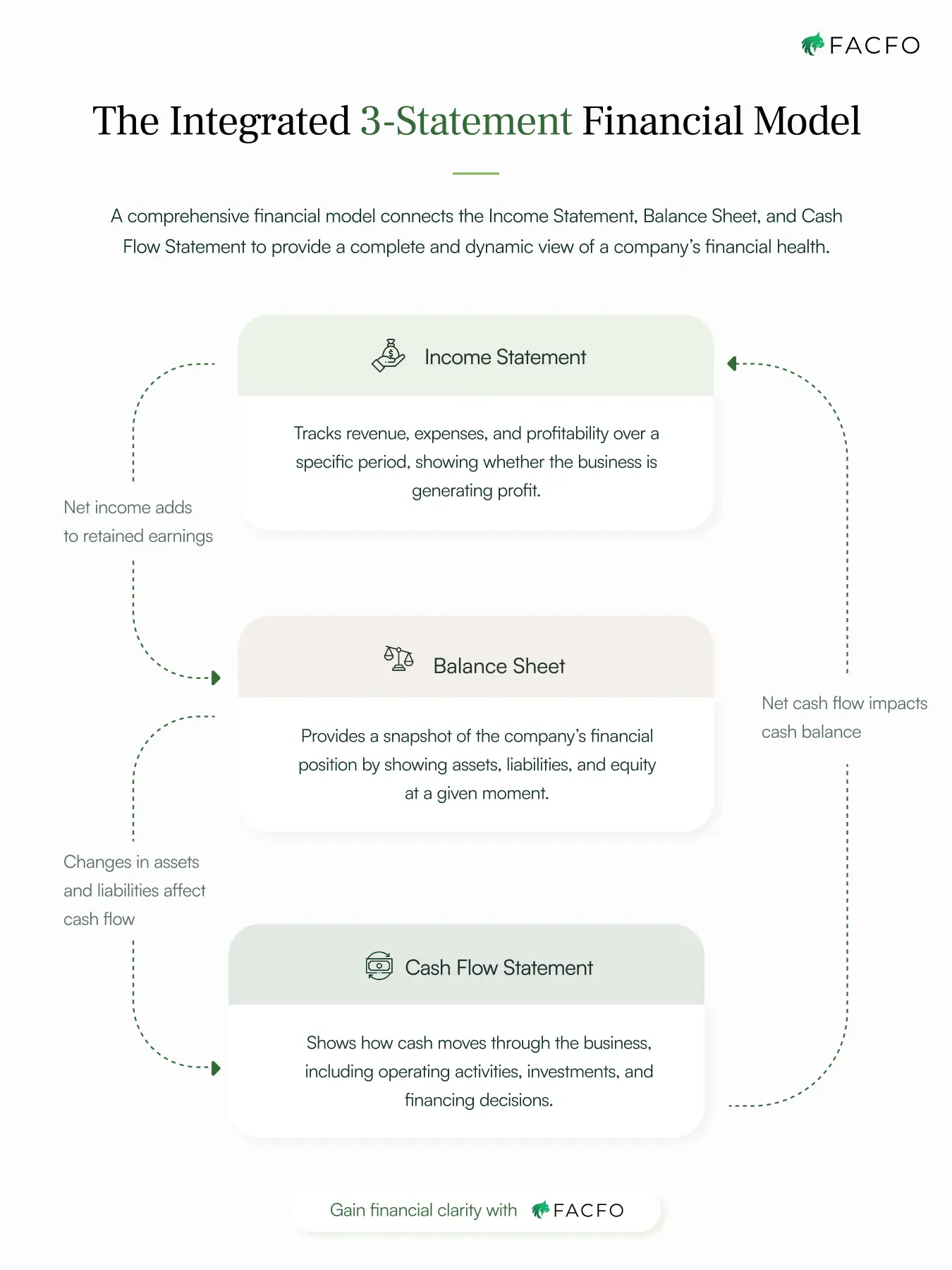
- Building Integrated Financial Models: Creating dynamic models that seamlessly connect your Income Statement, Balance Sheet, and Cash Flow Statement, providing a holistic and accurate view of your financial health and future potential. These models serve as your strategic compass for operations, fundraising, and valuation decisions.
- Supporting Fundraising and Investment: Presenting compelling, investor-ready financials that clearly articulate your growth trajectory, capital needs, and potential return on investment. This requires not just data, but a narrative that demonstrates financial viability and strategic foresight.
- Informed Decision-Making: Using forecasts to evaluate the financial impact of different business decisions, such as launching new products, entering new markets, or making significant capital expenditures.
Implementing Critical Controls for Data Reliability
The integrity of your financial data is paramount. Strategic financial leadership emphasizes the implementation of robust internal controls. These controls ensure that financial information is accurate, complete, and reliable, forming the bedrock for all strategic decisions. Without trustworthy data, even the most sophisticated analysis can lead to flawed conclusions. Establishing these controls enhances:
- Accuracy: Minimizing errors in financial reporting.
- Completeness: Ensuring all transactions are captured.
- Efficiency: Streamlining financial processes.
- Compliance: Meeting regulatory requirements.
- Risk Mitigation: Preventing fraud and financial mismanagement.
This focus on data integrity is an investment that pays dividends by providing a solid foundation for strategic planning and confident decision-making.
The Synergy of Bookkeeping and Strategic Oversight
While strategic financial leadership sets the direction, meticulous bookkeeping ensures the accuracy of the data that informs those decisions. Professional bookkeeping services provide the essential foundation for good financial management. They ensure that:
- Financial Records are Impeccable: All transactions are accurately recorded, categorised, and reconciled.
- Operational Efficiency is Maintained: Smooth processing of accounts payable, accounts receivable, and payroll.
- Compliance is Ensured: Adherence to tax regulations and accounting standards.
When robust bookkeeping is paired with strategic financial planning, a powerful synergy is created. This allows financial leaders to gain deep insights into operational performance, cost drivers, and revenue streams, enabling them to make more informed and timely decisions. The combination ensures that your financial data is not only clean but also actionable.
For a detailed breakdown of what professional bookkeeping involves and why DIY carries real compliance risk for Singapore companies, see our guide to bookkeeping for small businesses.
The Value of Expert Guidance: Why Singapore SMEs Choose a Fractional CFO
Navigating the complexities of financial management can be challenging, especially for fast-growing companies. Accessing high-level expertise is crucial, but the cost of a full-time CFO can be prohibitive. We set the two options side by side, including what a full-time hire really costs once CPF is added, in our guide on how a fractional CFO compares with a full-time CFO. This is where the value of expert guidance, often delivered through fractional CFO services, becomes apparent.
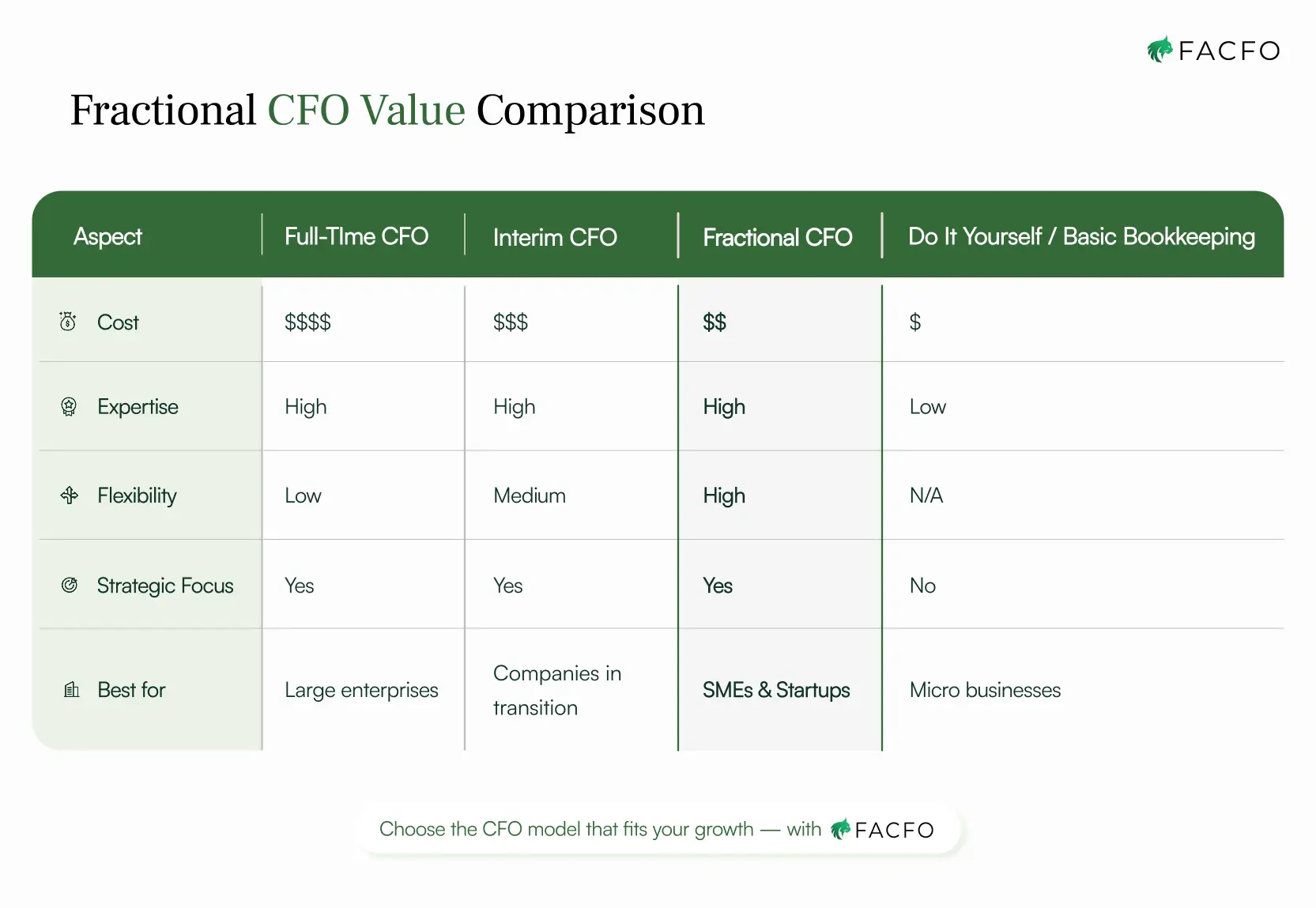
Engaging with experienced financial professionals offers several key advantages:
- Cost-Effective Expertise: Access seasoned CFOs with extensive startup and SME experience at a fraction of the cost of a full-time executive.
- Objective, Data-Driven Advice: Receive unbiased recommendations based on thorough analysis and a deep understanding of financial principles, grounded in integrity and ethical conduct.
- Scalable Support: Obtain the precise level of financial expertise your business needs, when you need it, without the overhead of full-time hires. Whether for ongoing support, specific projects, or interim roles, the engagement is tailored to your unique needs.
- Focus on Core Business: Free up your internal resources to concentrate on innovation, operations, and customer engagement.
- Enhanced Investor Confidence: Present a strong financial front that instills confidence in potential investors and lenders.
Building a Resilient Financial Future
Strategic financial leadership is not merely about managing numbers; it’s about building a resilient, profitable, and sustainable business. It’s about transforming financial data into clear directives for growth and stability. By focusing on strategic planning, cost optimisation, cash flow management, accurate forecasting, and data integrity, businesses can navigate the challenges of growth with confidence.
The journey of scaling a business is demanding, but with the right financial compass, it can be a path to lasting success. For many Singapore SMEs and startups, a fractional CFO in Singapore offers the most practical way to put that leadership in place. It brings senior financial expertise to growth-stage decisions without the cost of a full-time hire.